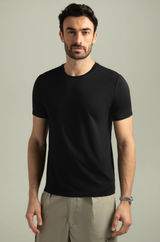
Performance without the plastic
Polos and tees with cooling and odor control built into the fiber. 0% polyester, no PFAS finishes, 20× more breathable than polyester, OEKO-TEX® Standard 100 certified.
Polyester is plastic, and the plastic is only the start. Antimony in the fiber, allergenic dyes, residues that survive the wash, PFAS and antimicrobial finishes on top. Here is what is in your shirt, what the evidence shows, and what HyperNatural uses instead.
Polyester is plastic, and a polyester shirt is never just the plastic. Inside the fiber there is antimony, a heavy metal left over from manufacturing that moves into your sweat. Disperse dyes, which are recognized skin allergens, are dissolved into it. Some dye-process residues survive washing. And there is often a finish sprayed on top: PFAS to repel water and stains, or an antimicrobial to cover the smell polyester holds onto. BPA keeps turning up in polyester-spandex activewear. And the fabric sheds plastic microfibers into the air you breathe.
So is polyester toxic? The PET polymer itself is too large to pass through skin. Everything riding in it and on it is not. The plastic is the delivery system, and it sits against your skin for hours, warm and damp, every time you wear it. Most people check the ingredients in their food and their skincare. Almost nobody checks the ingredients in their shirt. This article does, ingredient by ingredient, with the evidence for each and what HyperNatural uses instead. For the cancer question specifically, see Does Polyester Cause Cancer?
Materials are ingredients. Read a polyester performance shirt the way you would read a label:
Not one of these ingredients was chosen for your skin. They were chosen for the shirt: color that won't fade, water that beads off, a smell that stays hidden for a few more hours. HyperNatural starts from the other end, with fibers built to be worn against skin and performance that is in the yarn instead of added on top.
The US Food and Drug Administration permits PET in food packaging, which is why it is the plastic in drink bottles. That tells you what your polyester shirt is. It doesn't tell you the shirt belongs on sweating skin all day.
Skin is a decent barrier against big molecules. A widely cited dermatology rule of thumb says a compound needs a molecular weight under about 500 daltons to get through the outer layer, and a fiber-grade PET chain is many times larger than that. That is exactly why the polymer is not the whole story. The chemicals that do move from clothing into skin are the small molecules carried in the plastic: catalyst residue, dyes and finish ingredients. Polyester is the carrier for all of them.
Most polyester is polymerized with an antimony catalyst, and antimony stays in the finished fiber. A 2021 study measured roughly 125 to 470 micrograms of antimony per gram in polyester textiles meant for skin contact, then soaked them in artificial sweat at body temperature. Between 0.05% and 2% of it came out, roughly 0.1 to 1 microgram per gram of fabric. That is under the OEKO-TEX® Standard 100 limit for certified fabric, and it is still a heavy metal moving from a shirt into your sweat.
Warm, acidic sweat pulled out the most, which describes the back of a golf polo on the 14th hole in July. Most of the antimony came off in the first extraction, so the researchers advised washing synthetic garments before wearing them. If a shirt needs to be washed before it is safe to wear, the metal shouldn't have been in it to begin with. The cancer classification history is covered in our cancer article.
HyperNatural's Supima® cotton base was never made with an antimony catalyst, so there is no catalyst to wash out.
If polyester is doing something to your skin, the dye is the first suspect. Polyester is colored with disperse dyes: small molecules dissolved into the plastic at high temperature. Several are established contact allergens. For symptoms, patch testing and what helps, see our guide to polyester allergy.
In a 2000 study of 788 patients patch-tested at a contact dermatitis clinic, 40 reacted to at least one textile dye, and most of them reacted to Disperse Blue 106 (33 people) and Disperse Blue 124 (32 people). Eleven patients were tested with their own clothing and ten reacted to it. Nine of those ten reacted to blue or black linings made of 100% acetate or 100% polyester. A 2013 review of 54 studies put the average rate of allergy to Disperse Blue 106, Disperse Blue 124 and Disperse Orange 3 above 1% in screening studies.
The dye process leaves more behind. Swedish researchers tested 31 garments bought in Stockholm and found quinoline in almost every one. Quinoline is a dye-manufacturing chemical that the authors describe as a possible human carcinogen, and its levels tracked polyester content: the more polyester, the more quinoline. A follow-up study found quinolines in 81% of 27 garments, and ten washes removed only about 20% of them.
OEKO-TEX® Standard 100 caps allergenic dyes, including Disperse Blue 106 and 124, at 50 mg/kg and quinoline at 50 mg/kg. HyperNatural fabrics are OEKO-TEX® Standard 100 certified, so they are tested against those limits. Most polyester is never tested against them at all.
Polyester can't repel water, resist stains or stay fresh on its own, so the industry sprays those properties on afterwards. That is where a lot of the chemistry in a performance shirt comes from, and the label usually tells you it is there.
Water-repellent and stain-resistant finishes have long relied on per- and polyfluoroalkyl substances (PFAS), the "forever chemicals." They are not part of the polyester. They are applied to it, because repelling water is not something the fiber does on its own. A 2024 study put 17 PFAS on lab-grown models of human skin. Shorter-chain compounds were absorbed substantially, up to 58.9% of the dose for one of them (PFPeA), and longer-chain compounds lodged in the skin tissue. The study used a high dose dissolved in solvent, but it settles the question of whether PFAS can get through skin: they can.
Regulators are acting on it. California has barred new textiles with intentionally added PFAS since January 2025, and the EU's restriction on PFHxA and related substances began applying to consumer clothing in October 2026. OEKO-TEX® Standard 100 now prohibits intentional use of PFAS and caps total fluorine at 100 mg/kg.
HyperNatural doesn't spray performance on. There are no PFAS finishes on our fabrics.
Polyester holds onto body odor (we explain why in Why Does Polyester Smell?), so many synthetic garments get an antimicrobial finish on top: nanosilver, quaternary ammonium compounds or triclosan. Those finishes don't stay put. A 2008 study of six brands of silver-treated socks found up to 1,360 micrograms of silver per gram of sock, and some socks released as much as 650 micrograms into half a liter of wash water. A finish that washes out stops working, and the silver ends up in wastewater. OEKO-TEX® Standard 100 doesn't allow intentional use of biologically active products, apart from treatments it has specifically accepted.
HyperNatural puts odor control in the fiber. Hyper-Chitin is chitin from crab shells, a natural antimicrobial, and it delivers a 99%+ reduction in odor-causing bacteria with no metal or chemical anti-odor finish on top. Crab shells, not chemicals.
Bisphenol A (BPA) is a hormone-disrupting chemical best known from hard plastics and can linings, and it keeps showing up in polyester activewear. In October 2022 the Center for Environmental Health served California Proposition 65 notices alleging BPA exposure from athletic shirts made primarily of polyester with spandex, and it named absorption through skin as a route of exposure. California's limit for BPA absorbed through skin from solid materials is 3 micrograms per day.
Peer-reviewed testing points the same way. A 2017 study of 77 textile and infant clothing items found BPA in 82% of them. Socks had the highest levels, and the single highest result, 13,300 nanograms per gram, came from an infant sock that was 97% polyester. The authors estimated infant skin exposure from textiles at up to 7.28 nanograms per kilogram of body weight per day. In 2023 the European Food Safety Authority set its tolerable daily intake for BPA at 0.2 nanograms per kilogram per day. Regulators are still arguing about where the safe line sits; Germany's risk agency, BfR, wants it set higher. Measured against EFSA's line, clothing is not a trivial source.
OEKO-TEX® Standard 100 caps BPA at 10 mg/kg. HyperNatural fabrics are tested against that limit, on a Supima® cotton base with 0% polyester.
Polyester sheds plastic. A 2020 study of four polyester garments measured 700 to 4,000 fibers per gram of fabric in a single wash and up to 400 fibers per gram in 20 minutes of ordinary wear. The authors concluded that what a garment sheds into the air while you wear it is in the same range as what it sheds into water in the wash.
Some of it ends up in your lungs. A 2019 study put a breathing mannequin in three Danish apartments and found that polyester made up about 81% of the airborne microplastic particles identified. In the most contaminated sample, a person at light activity could inhale up to 272 microplastic particles a day. A 2021 autopsy study then found plastic particles in 13 of 20 human lung samples.
What those particles do once they are inside you hasn't been worked out yet. Polyester sheds them in the meantime, and it won't stop while science catches up. HyperNatural's base is Supima® cotton with Hyper-Cool Jade®, at 0% polyester. The stretch comes from Creora® Regen, a recycled spandex certified to the Global Recycled Standard, so even the stretch component is made from recycled material rather than new plastic.
Body heat. Warm, acidic sweat pulls more antimony out of polyester than cool, neutral sweat does, and heat is also when polyester feels worst. It traps heat and leaves sweat sitting on your skin; see Does Polyester Make You Sweat More?
High heat. Antimony release from PET climbs steeply with temperature. In PET water bottles, antimony stayed well under the US drinking-water limit at room temperature. At 60°C it was predicted to cross that limit in about 176 days, and at 80°C in about 2.3 days. Your shirt is not a water bottle left in a hot car, but the chemistry runs the same direction: heat pulls more metal out of the plastic. A hot iron can also scorch or melt polyester, which is why the care label asks for a low setting.
Washing. Washing a new garment removes much of the extractable antimony and some process residues. It removes far less quinoline (about 20% after ten washes), and a durable water-repellent finish is designed to survive the washing machine. Every wash also sends another round of plastic microfibers down the drain.
| Ingredient | Why it is in polyester | What the evidence shows | What HyperNatural does instead |
|---|---|---|---|
| PET plastic | It is the fiber | Too large to cross skin itself, but it carries everything below | Supima® cotton base, 0% polyester |
| Antimony | Polymerization catalyst | 0.1–1 µg/g moved into artificial sweat; more in warm, acidic sweat | Cotton base made without an antimony catalyst |
| Disperse dyes | How polyester is colored | Established contact allergens; average allergy rate above 1% in screening studies | OEKO-TEX® Standard 100 certified fabric |
| Quinoline | Dye-manufacturing residue | Found in most garments tested, rising with polyester content; washing removes about 20% | OEKO-TEX® Standard 100 certified fabric |
| PFAS | Sprayed-on water and stain repellents | Some PFAS absorbed through skin models; now restricted in California and the EU | No PFAS finishes |
| Silver, quats, triclosan | Anti-odor finishes to cover what polyester holds | Wash out into wastewater and stop working | Hyper-Chitin in the fiber: 99%+ reduction in odor-causing bacteria |
| BPA | Found in polyester-spandex activewear and socks | Detected in 82% of textiles in one study; alleged in athletic shirts under Prop 65 | OEKO-TEX® Standard 100 certified fabric (10 mg/kg BPA cap) |
| Microfibers | Plastic shedding from the fabric | Polyester is about 81% of indoor airborne microplastics in one study; microplastics also found in human lung tissue | 0% polyester; recycled Creora® Regen spandex for stretch |
Synthetic performance became normal because it was easy to make, not because it was good to wear. HyperNatural was built on the opposite premise: what touches your skin all day matters, and performance should come from the fiber, not from plastic with chemistry sprayed on top.
Every HyperNatural shirt starts at the yarn level:
The result is 0% polyester, no PFAS finishes, lab-tested 20× more breathable than polyester, and fabrics that are OEKO-TEX® Standard 100 certified and bluesign® approved. In short, it is a cleaner first layer.
You can feel the difference. The Pinehurst jersey polo stays cool and dry through a summer round. The Dagger slim-fit micro-pique polo goes from a red-eye straight into a meeting. The Topanga featherweight tee goes to the gym, and you keep it on after. Most people notice one thing first: it just feels cooler. Then comes the easiest compliment you'll ever get: "Wait… that's the same shirt?"
That is wearable wellness. What is on your body is in your body, so make it something better by nature. Shop the collection.
Polyester is plastic, and what makes it a concern is what comes with it. The PET polymer is too large to cross skin, but a polyester shirt also carries antimony catalyst residue that moves into sweat, disperse dyes that are recognized skin allergens, dye residues such as quinoline that survive washing, and often PFAS or antimicrobial finishes. BPA has been found in polyester-spandex activewear. OEKO-TEX® Standard 100 tests the finished fabric against limits for all of these; most polyester is never tested. HyperNatural fabrics are OEKO-TEX® Standard 100 certified, with 0% polyester and no PFAS finishes.
The dyes are the best-documented problem. Polyester is colored with disperse dyes, and Disperse Blue 106 and 124 are established contact allergens; a 2013 review found average allergy rates above 1% in patch-test screening studies. Heat, trapped sweat and friction make irritation more likely. If you react to synthetic clothing, ask a dermatologist about textile dye patch testing, and look for OEKO-TEX® Standard 100, which caps allergenic dyes at 50 mg/kg.
Polyester activewear keeps testing positive for it. A 2017 study detected BPA in 82% of 77 textiles tested, with the highest level in a 97% polyester infant sock. In 2022 the Center for Environmental Health alleged BPA exposure from polyester-spandex athletic shirts under California's Proposition 65 and named skin absorption as a route. OEKO-TEX® Standard 100 caps BPA at 10 mg/kg, and HyperNatural fabrics are tested against that limit.
Heat pulls more out of it. Warm, acidic sweat releases more antimony from polyester than cool sweat, and antimony release from PET climbs steeply at high temperatures. In bottled-water studies it crossed the US drinking-water limit in about 2.3 days at 80°C. Heat is also when polyester feels worst, because it traps warmth and leaves sweat on your skin. A hot iron can scorch or melt it.
Yes. In testing, the first extraction released the largest share of the antimony that sweat can pull out, and washing also removes some dye residues. It doesn't remove everything: quinolines fell only about 20% after ten washes in one study, and durable water-repellent finishes are designed to survive laundering. A shirt made without an antimony catalyst or PFAS finishes, like HyperNatural's Supima® cotton and Hyper-Cool Jade® shirts, doesn't need the washing machine to make it wearable.
Last reviewed October 2026. This article is for general information and is not medical advice.
No finish to wash out
Jade minerals and chitin in the fiber, Supima® cotton, 0% polyester. OEKO-TEX® Standard 100 certified.
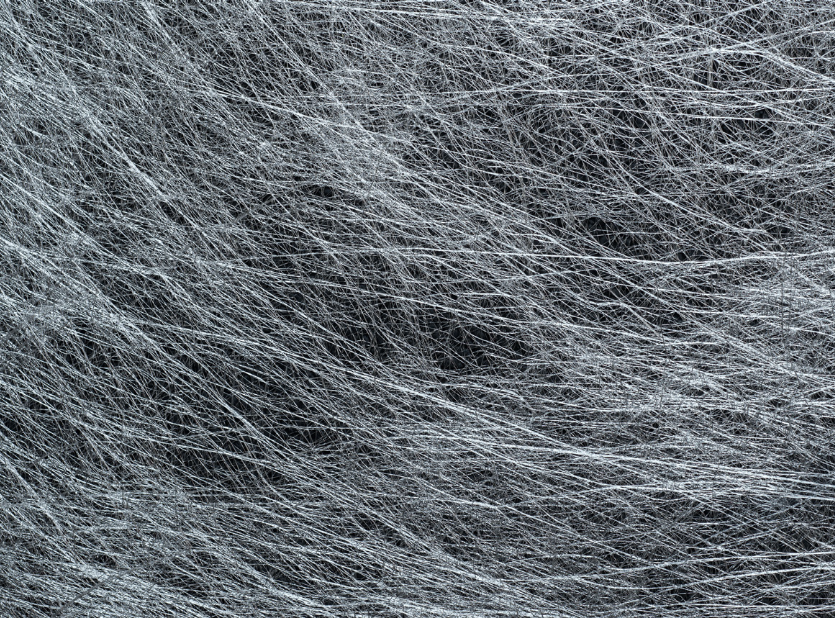
Where the chemistry comes from.
Bio-based fibers
Supima® cotton, jade-mineral and chitin fibers; 0% polyester
Petroleum polymer
PET made with an antimony catalyst that stays in the fiber
Odor control in the fiber
Hyper-Chitin: 99%+ reduction in odor-causing bacteria
Odor control in a finish
Silver or quat treatments that can wash out into wastewater
5° cooler on skin
Jade minerals in the fiber — nothing applied on top
Holds heat and sweat
Hydrophobic fiber leaves moisture sitting on skin
OEKO-TEX® Standard 100
Tested against limits for antimony, allergenic dyes, BPA and PFAS
Often uncertified
Chemical certification is voluntary, so many garments are never tested
Catalyst, dyes, residues and sprayed-on finishes: a synthetic shirt's performance comes with a list of ingredients. HyperNatural builds performance into the fiber instead.
Polyester is plastic, and what makes it a concern is what comes with it. The PET polymer is too large to cross skin, but a polyester shirt also carries antimony catalyst residue that moves into sweat, disperse dyes that are recognized skin allergens, dye residues such as quinoline that survive washing, and often PFAS or antimicrobial finishes. BPA has been found in polyester-spandex activewear. OEKO-TEX® Standard 100 tests the finished fabric against limits for all of these; most polyester is never tested. HyperNatural fabrics are OEKO-TEX® Standard 100 certified, with 0% polyester and no PFAS finishes.
The dyes are the best-documented problem. Polyester is colored with disperse dyes, and Disperse Blue 106 and 124 are established contact allergens; a 2013 review found average allergy rates above 1% in patch-test screening studies. Heat, trapped sweat and friction make irritation more likely. If you react to synthetic clothing, ask a dermatologist about textile dye patch testing, and look for OEKO-TEX® Standard 100, which caps allergenic dyes at 50 mg/kg.
Polyester activewear keeps testing positive for it. A 2017 study detected BPA in 82% of 77 textiles tested, with the highest level in a 97% polyester infant sock. In 2022 the Center for Environmental Health alleged BPA exposure from polyester-spandex athletic shirts under California's Proposition 65 and named skin absorption as a route. OEKO-TEX® Standard 100 caps BPA at 10 mg/kg, and HyperNatural fabrics are tested against that limit.
Heat pulls more out of it. Warm, acidic sweat releases more antimony from polyester than cool sweat, and antimony release from PET climbs steeply at high temperatures. In bottled-water studies it crossed the US drinking-water limit in about 2.3 days at 80°C. Heat is also when polyester feels worst, because it traps warmth and leaves sweat on your skin. A hot iron can scorch or melt it.
Yes. In testing, the first extraction released the largest share of the antimony that sweat can pull out, and washing also removes some dye residues. It doesn't remove everything: quinolines fell only about 20% after ten washes in one study, and durable water-repellent finishes are designed to survive laundering. A shirt made without an antimony catalyst or PFAS finishes, like HyperNatural's Supima® cotton and Hyper-Cool Jade® shirts, doesn't need the washing machine to make it wearable.

"Why don't we think more about what is directly against our skin?"
"Naturally antimicrobial. Naturally anti-inflammatory. 99.9% odor resistant. Zero BPA. Zero PFAS."

"I'm all about non-toxic fits and this brand gives me tons of options with real natural materials."

"This is for the man in your life. To nudge them in the right direction."

"No overheating, no odor and looking classy"

"They take it to a whole new level. Hypernatural is making fabric out of crab shells."
"The comfort and freedom of movement that I get with these clothes is absolutely awesome"

"I really like this. It's super soft and breathable."


Polos and tees with cooling and odor control built into the fiber. 0% polyester, no PFAS finishes, 20× more breathable than polyester, OEKO-TEX® Standard 100 certified.