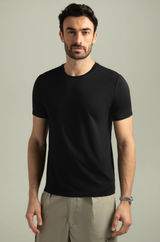
Clothing that feels better on skin
Polos and tees in Supima® cotton, Hyper-Cool Jade® and Hyper-Chitin. 0% polyester, 20× more breathable than polyester, OEKO-TEX® Standard 100 certified.
Polyester is plastic, and it takes color only from disperse dyes, some of the best-documented skin allergens in clothing. Here is why a dye allergy takes so long to diagnose, how to get an answer, and what to wear instead.
Polyester is plastic, and plastic needs help to become a shirt. It takes color only from disperse dyes, which are among the best-documented skin allergens in clothing. It holds sweat against your skin and rubs the same spots raw. That is what most "polyester allergy" is: a reaction to the dyes it takes to color plastic, made worse by what plastic does to warm, damp skin.
The polymer chain is too large to trigger an allergy by itself, so the culprits are what comes with it: disperse dyes, wrinkle-free finishes, and heat rash and chafing. They can look alike and they are hard to pin down. A dermatologist tells them apart with patch testing. Then you can take the trigger off your skin.
In October 2026, GearJunkie's news editor, Andrew McLemore, described a rash that took two years to explain. It woke him at night. Dermatologists in two countries treated it as a fungus or a parasite. High-dose steroids calmed it at a cost, and biopsies left scars. An early patch test came back inconclusive. A second round, run when his skin was calmer, found the answer: an allergy to disperse dyes, the dyes used on polyester and nylon. He had spent nearly four years testing performance apparel for a living.
His story is not unusual. It shows how this allergy works. The rash looks like other things, the trigger is something you put on every day, and the clothing label never mentions it. GearJunkie highlighted HyperNatural for its cotton-based performance apparel. HyperNatural starts where his dermatologists ended up: a natural fiber next to your skin.
Polyester repels water, so it can't take the water-soluble dyes used on cotton. It is colored with disperse dyes: small molecules that dissolve into the plastic at high temperature. Nylon, acetate and acrylic use them too. Molecules that small can get through skin, and several are established contact allergens. Reviews consistently rank disperse dyes as the leading cause of textile dermatitis.
Dermatologists have known this for decades. In 2000 the American Contact Dermatitis Society made disperse blue dyes its first Allergen of the Year. The same names keep coming back: Disperse Blue 106, Disperse Blue 124, Disperse Orange 3 and Disperse Yellow 3. A 2013 review of 54 studies put the average allergy rate to Disperse Blue 106, Disperse Blue 124 and Disperse Orange 3 above 1% in screening studies. A 1995 review in the Journal of the American Academy of Dermatology called Disperse Blue 106 and 124 the strongest clothing-dye sensitizers then known.
Real garments bear it out. At one Canadian patch-test clinic, ten of eleven patients tested with their own clothing reacted to it, and nine of those reacted to blue or black linings made of 100% acetate or 100% polyester. Dark colors carry more dye. And Disperse Orange 3 cross-reacts with PPD, the allergen in permanent hair dye: in a 2023 Swedish study, every patient who reacted to Disperse Orange 3 also reacted to PPD.
HyperNatural is built on Supima® cotton and Hyper-Cool Jade®, with 0% polyester. Our fabrics are OEKO-TEX® Standard 100 certified, which caps the allergenic disperse dyes, Disperse Blue 106 and 124, Disperse Orange 3 and Disperse Yellow 3 among them, at 50 mg/kg.
Textile dye dermatitis is frequently missed. Four things work against you:
Among people being patch tested for dermatitis in a European and US multicenter study, up to 6.9% reacted to the textile dye mix. In more than 30% of those cases, the reaction explained or contributed to their skin problem.
Food has an ingredient list. So does skincare. Clothing doesn't. In the US, a garment label has to show the fiber names and percentages, who made it and where. Nothing about the dyes or the finishes. Supply chains cross three or four countries between spinning and sewing, and many brands can't tell you which dyes are in their own clothes.
Certification is the closest thing your shirt has to an ingredient label. OEKO-TEX® Standard 100 tests every thread, button and accessory against a list of more than 1,000 harmful substances, including the allergenic disperse dyes, banned azo dyes and formaldehyde. bluesign® works upstream, screening the chemicals that go into the mill before they are used. Neither is required in the US, and most polyester never sits either test.
HyperNatural fabrics are OEKO-TEX® Standard 100 certified and bluesign® approved. Check your labels.
Formaldehyde-based resins make fabric wrinkle-resistant, and they are potent sensitizers in some people. A US Government Accountability Office report found these resins mostly on cotton and cotton blends labeled durable press, non-iron or wrinkle-free, including poly-cotton. Dermatitis from them is worse where clothing is tight and tends to be chronic. A poly-cotton blend can carry both a disperse dye and a resin.
OEKO-TEX® Standard 100 caps formaldehyde at 75 mg/kg for items worn against skin, and HyperNatural fabrics are tested against that limit.
This is the damage polyester does on its own. Heat rash (miliaria) happens when sweat ducts get blocked and sweat leaks into the skin, raising small itchy or prickly bumps. Clothing that holds heat and sweat against the skin makes it more likely. Polyester's moisture regain is about 0.4%, so on a hot day light sweat stays on your skin instead of going into the fiber; we explain why in Does Polyester Make You Sweat More? Warm, wet skin chafes faster, and friction plus sweat makes any dye reaction worse.
Golfers know the setup: four-plus hours in the sun, a fitted polyester polo, a tucked-in waistband and a swing that rubs the same strip of skin under the arm all round.
HyperNatural takes the heat out of that equation. The Supima® cotton base absorbs moisture instead of leaving it on your skin, jade minerals in the fiber give you 5° cooler with Hyper-Cool Jade®, and the fabric is 20× more breathable than polyester.
Textile dermatitis shows up where clothing fits closely and skin stays warm and damp: armpits, the crooks of the elbows, backs of the knees, groin and inner thighs, waistband and trunk. The armpit gives a useful clue. Dye dermatitis tends to hit the rim of the armpit and spare the hollow, while deodorant reactions hit the hollow.
| Culprit | Where you meet it | How to tell |
|---|---|---|
| Disperse dyes | Polyester, nylon, acetate and acrylic, especially dark blues, blacks and linings | Itchy eczema at armpit rims, waistband and folds; positive patch test to textile dyes |
| Wrinkle-free finishes | Non-iron, wrinkle-free and easy-care garments, including poly-cotton | Eczema worse under tight clothing; positive patch test to formaldehyde or textile resins |
| Heat rash | Fabric that traps heat and sweat in hot weather | Tiny prickly bumps during or after heat |
| Chafing | Tight seams, waistbands, inner thighs, underarms | Raw or stinging; follows the rub line |
| Elastic and hardware | Waistbands, underwear bands, snaps and rivets | Rash matches the band or the metal |
A dermatologist applies small amounts of standard allergens to your back under patches, removes them after about two days and reads your skin over the following days. The European baseline series has carried a textile dye mix of eight disperse dyes since 2016, and the American Contact Dermatitis Society added Disperse Yellow 3 to its core series in 2020.
Tell your dermatologist about any steroids or immunosuppressants you are taking, ask for textile dyes and resins to be included, and bring the garments you suspect.
This article is general information, not a diagnosis. See a board-certified dermatologist if:
For the wider chemistry in a polyester shirt, see Is Polyester Toxic? and Does Polyester Cause Cancer?
The dermatologist's answer for textile dye allergy is simple: light-colored natural fibers, like cotton, linen and wool, next to your skin. The hard part has been finding natural fiber that performs on a hot day, a long flight or a full round. That is what HyperNatural builds.
Your skin is your largest organ. It regulates temperature, reacts to friction and sits against whatever you put on it for hours. Most performance apparel puts dyed plastic there, with sweat trapped underneath. HyperNatural builds the layer that touches your skin from fibers made for it:
The result is 0% polyester, 20× more breathable than polyester, no PFAS finishes, and fabrics that are OEKO-TEX® Standard 100 certified and bluesign® approved. Certified Non-toxic.
You feel it where rashes start. The Pinehurst jersey polo, with Hyper-Cool Jade® and Hyper-Chitin, stays cool and dry under the arm through 18 holes in July. The Dagger slim-fit micro-pique polo goes from a red-eye straight into a meeting. The Topanga featherweight tee goes to the gym, and you keep it on after. The goal is simple: clothing that feels better on skin. That's wearable wellness.
Start with the shirts you sweat in. Shop the collection.
What people react to is almost always what comes with polyester, not the plastic itself. The polymer molecules are too large to get through skin. The usual culprits are the disperse dyes used to color polyester, notably Disperse Blue 106 and 124, Disperse Orange 3 and Disperse Yellow 3, plus wrinkle-free finishing resins and the heat rash and chafing that come from polyester holding sweat against your skin.
A dye or finish allergy usually looks like eczema: itchy, red, scaly patches that come back each time you wear the garment. It shows up where clothing is tight and damp: armpit rims, waistband, groin and inner thighs, backs of knees and crooks of elbows. Heat rash looks different: clusters of tiny prickly bumps that appear with sweating.
The rash looks like eczema, fungus or heat rash, it can appear days after you wear the shirt, and it can take weeks to clear. Steroids and other immunosuppressants used to treat it can suppress a patch test and give a false negative. And standard screening panels miss many of the dyes in real garments, so bring the clothes you suspect to your dermatologist.
Patch testing with a dermatologist is the reliable way. Standard allergens, including a textile dye mix, are applied to your back for about two days and read over the following days. Bring the garments you suspect so they can be tested too. A negative test points toward heat and friction.
Yes. OEKO-TEX® Standard 100 tests every thread, button and accessory against more than 1,000 harmful substances. It lists the allergenic disperse dyes, including Disperse Blue 106 and 124, Disperse Orange 3 and Disperse Yellow 3, and caps each at 50 mg/kg, and it caps formaldehyde at 75 mg/kg for items worn against skin. HyperNatural fabrics are OEKO-TEX® Standard 100 certified. If you are already sensitized to a specific dye, follow your patch-test results.
This article is for general information and is not medical advice.
Built for long, hot days against your skin
Supima® cotton and Hyper-Cool Jade®: 5° cooler when it's hot, 0% polyester, OEKO-TEX® Standard 100 certified.
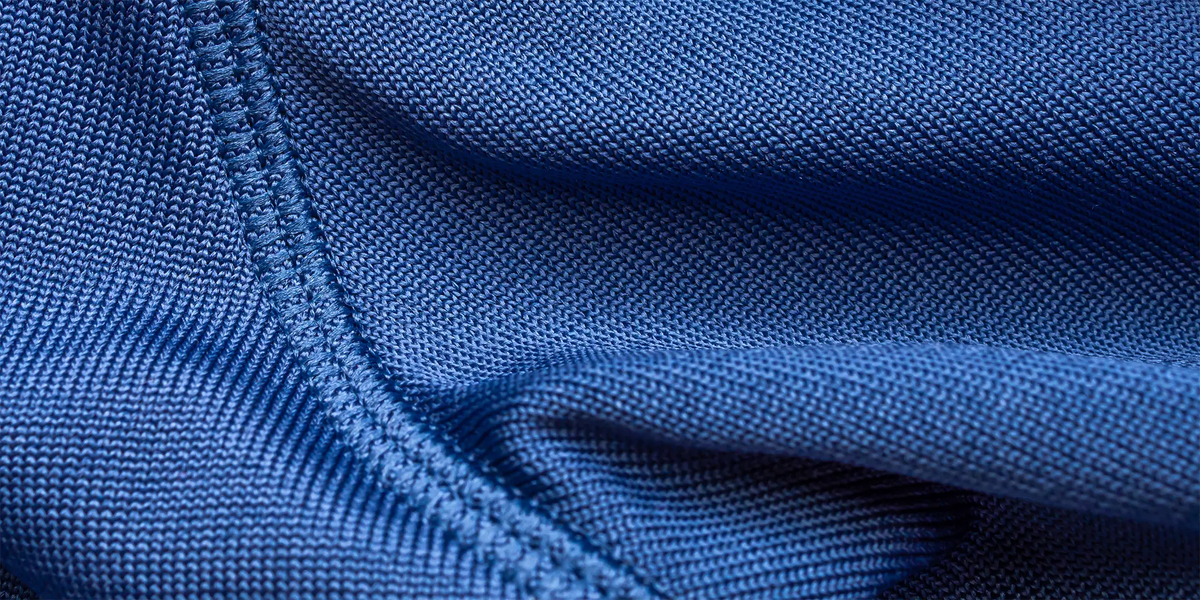
What sits against your skin all day.
Natural-fiber base
Supima® cotton and Hyper-Cool Jade®, 0% polyester
Disperse-dyed
The dye class behind most textile contact allergy
OEKO-TEX® Standard 100
Finished fabric tested against limits for allergenic dyes and formaldehyde
Unchecked unless certified
Without a certificate, nobody has tested the dye limits
20× more breathable
Cotton absorbs moisture and the fabric breathes 20× better than polyester
Holds sweat on skin
~0.4% moisture regain keeps skin warm, wet and rubbing
5° cooler when it's hot
Jade minerals in the fiber with Hyper-Cool Jade®
Warm and occlusive
The heat-and-sweat conditions behind heat rash and chafing
Disperse dyes and finishes are the primary culprits of polyester alergy.
What people react to is almost always what comes with polyester, not the plastic itself. The polymer molecules are too large to get through skin. The usual culprits are the disperse dyes used to color polyester, notably Disperse Blue 106 and 124, Disperse Orange 3 and Disperse Yellow 3, plus wrinkle-free finishing resins and the heat rash and chafing that come from polyester holding sweat against your skin.
A dye or finish allergy usually looks like eczema: itchy, red, scaly patches that come back each time you wear the garment. It shows up where clothing is tight and damp: armpit rims, waistband, groin and inner thighs, backs of knees and crooks of elbows. Heat rash looks different: clusters of tiny prickly bumps that appear with sweating.
The rash looks like eczema, fungus or heat rash, it can appear days after you wear the shirt, and it can take weeks to clear. Steroids and other immunosuppressants used to treat it can suppress a patch test and give a false negative. And standard screening panels miss many of the dyes in real garments, so bring the clothes you suspect to your dermatologist.
Patch testing with a dermatologist is the reliable way. Standard allergens, including a textile dye mix, are applied to your back for about two days and read over the following days. Bring the garments you suspect so they can be tested too. A negative test points toward heat and friction.
Yes. OEKO-TEX® Standard 100 tests every thread, button and accessory against more than 1,000 harmful substances. It lists the allergenic disperse dyes, including Disperse Blue 106 and 124, Disperse Orange 3 and Disperse Yellow 3, and caps each at 50 mg/kg, and it caps formaldehyde at 75 mg/kg for items worn against skin. HyperNatural fabrics are OEKO-TEX® Standard 100 certified. If you are already sensitized to a specific dye, follow your patch-test results.

"Why don't we think more about what is directly against our skin?"
"Naturally antimicrobial. Naturally anti-inflammatory. 99.9% odor resistant. Zero BPA. Zero PFAS."

"I'm all about non-toxic fits and this brand gives me tons of options with real natural materials."

"This is for the man in your life. To nudge them in the right direction."

"No overheating, no odor and looking classy"

"They take it to a whole new level. Hypernatural is making fabric out of crab shells."

"The comfort and freedom of movement that I get with these clothes is absolutely awesome"

"I really like this. It's super soft and breathable."


Polos and tees in Supima® cotton, Hyper-Cool Jade® and Hyper-Chitin. 0% polyester, 20× more breathable than polyester, OEKO-TEX® Standard 100 certified.