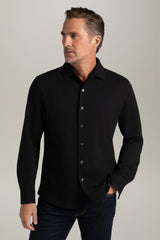
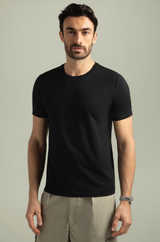
Get the plastic off the course.
Golf polos in Supima® cotton, Hyper-Cool Jade® and Hyper-Chitin instead of polyester. 20x more breathable, up to 5° cooler, 99%+ fewer odor-causing bacteria, 0% polyester.
The golf aisle is a wall of plastic. Here is why polyester is the wrong fiber for four hours in the sun, what natural fiber golf shirts are actually made of, and how to tell a real one from a label that just says "eco".
In der Welt der Sportbekleidung sind Golf-Poloshirts ein Symbol für Stil und Funktionalität zugleich. Doch während wir uns in eine Zukunft begeben, in der Nachhaltigkeit und Gesundheitsbewusstsein von größter Bedeutung sind, durchlaufen die Rohmaterialien, die für die Herstellung dieser Golfhemden verwendet werden, eine bedeutende Transformation. Entgiften Sie Ihre Golfhemden. Die Zeiten, in denen man sich ausschließlich auf synthetische Stoffe verließ, sind vorbei; stattdessen entsteht eine neue Ära der natürlich gewonnenen Bio-Fabrikate, die chemikalienfreie, ungiftige Alternativen versprechen, die sowohl das Wohlbefinden des Trägers als auch die Umwelt in den Vordergrund stellen. HyperNatural.
Einer der Hauptgründe für die Umstellung auf nicht-synthetische Materialien bei Golfhemden ist das wachsende Bewusstsein für Gesundheitsrisiken, die mit dem Tragen synthetischer Stoffe verbunden sind, insbesondere bei körperlichen Aktivitäten wie Golfspielen. Untersuchungen haben gezeigt, dass Schwitzen in synthetischen Materialien aufgrund des Vorhandenseins von toxischen Chemikalien und Farbstoffen zu einer Reihe von Gesundheitsproblemen führen kann.
Eine im Journal of Textile Science & Fashion Technology veröffentlichte Studie beleuchtete die schädlichen Auswirkungen synthetischer Textilfarbstoffe auf die Haut. Die Forschung ergab, dass bestimmte synthetische Farbstoffe krebserregende Verbindungen enthalten, die beim Schwitzen von der Haut aufgenommen werden können, was möglicherweise das Risiko von Hautreizungen, Allergien und langfristig sogar schwerwiegenderen Gesundheitsproblemen erhöht.
Darüber hinaus sind synthetische Stoffe bekannt für ihre schlechte Atmungsaktivität und Feuchtigkeitsregulierung, was das Unbehagen bei längeren körperlichen Aktivitäten verschlimmern kann. Dies ist besonders problematisch für Golfer, die Stunden auf dem Platz verbringen und unterschiedlichen Wetterbedingungen ausgesetzt sind. Synthetische Materialien schließen Hitze und Feuchtigkeit auf der Haut ein, schaffen ein Umfeld, das für Bakterienwachstum prädestiniert ist und unangenehme Gerüche einschließt.
Im Gegensatz dazu bieten natürlich gewonnene Bio-Fabrikate wie HyperNatural eine Lösung, die sowohl die Gesundheits- als auch die Leistungsbedenken im Zusammenhang mit synthetischen Materialien berücksichtigt. Stoffe aus Supima®-Baumwolle, Bambus, Hanf und anderen pflanzlichen Fasern zeichnen sich nicht nur durch überragende Atmungsaktivität und feuchtigkeitsableitende Eigenschaften aus, sondern eliminieren auch die Notwendigkeit schädlicher Chemikalien und Farbstoffe im Herstellungsprozess. HyperNatural ist 20x atmungsaktiver als Polyester.
Eine aktuelle Studie der Sustainable Apparel Coalition ergab, dass Kleidungsstücke aus Naturfasern ihre synthetischen Gegenstücke in Bezug auf Umweltverträglichkeit und menschliche Gesundheitsaspekte deutlich übertrafen. Die Studie betonte die Bedeutung der Einführung nachhaltiger und ungiftiger Alternativen in der Bekleidungsindustrie, um die negativen Auswirkungen der Chemikalienexposition auf Verbraucher und den Planeten zu mindern. Wenn Sie eine Entgiftung benötigen oder Krebs hatten, achten Sie auf „Oeko-Tex Standard 100“, um sicherzustellen, dass Ihre Kleidung sauber und sicher ist.
Im Bereich der Golfbekleidung setzen Marken zunehmend auf diese natürlichen Bio-Fabrikate und erkennen die Nachfrage nach umweltfreundlichen und gesundheitsbewussten Optionen bei den Verbrauchern. Von Polohemden aus Supima®-Baumwolle bis hin zu Performance-Stoffen aus Viskose-Mischungen haben Golfer jetzt Zugang zu einer breiten Palette nachhaltiger Alternativen, die Stil, Qualität und Funktionalität vereinenGet the plastic off the course
Supima® cotton, jade minerals and chitin instead of polyester. OEKO-TEX® Standard 100 and bluesign® certified.

What each shirt does to you over 18 holes in the heat.
20x more breathable
Cotton fiber passes vapor; the knit passes air
Breathes only through the knit
The fiber itself is hydrophobic and vapor-tight
Up to 5° cooler on skin
Jade minerals in the fiber conduct heat away
Warm and slick when saturated
No thermoregulation edge in controlled tests
99%+ fewer odor bacteria
Chitin is naturally antimicrobial; cotton releases the least odor
Holds odor longest
Absorbs oily sweat compounds and hosts micrococci
0% polyester
No petroleum fiber, no persistent plastic shedding; GRS recycled spandex
Sheds microfibers
Up to 400 fibers per gram in 20 minutes of wear
OEKO-TEX® Standard 100, bluesign®
Chemistry screened at the mill and tested in the finished fabric
Usually uncertified
Disperse dyes are recognised contact allergens
Polyester traps heat, holds odor and sheds microfibers. Supima® cotton engineered with Hyper-Cool Jade® and Hyper-Chitin does the job without it: 20x more breathable, up to 5° cooler, 0% polyester.
Plastic, mostly. The typical golf shirt is polyester or polyester-spandex, and it is on the rack because it is cheap and prints well, not because it is good to wear at the turn. Polyester was 59% of world fiber production in 2024 against 19% for cotton. Natural fiber golf shirts use cotton (including extra-long-staple Supima®), cellulose fibers such as viscose, merino wool, or blends of those with a little stretch.
Not polyester, unless you are playing in the rain. Polyester dries fastest and blocks UV, and that is where its case ends: it holds heat against your skin, holds odor longer than any natural fiber tested, and sheds plastic. Cotton breathes through the fiber, feels cool and releases the least odor. A natural fiber engineered for golf, such as Supima® cotton with Hyper-Cool Jade® and Hyper-Chitin, keeps cotton's advantages and fixes its weak spots: 20x more breathable than polyester, up to 5° cooler on the skin, and 99%+ fewer odor-causing bacteria.
Yes, and the first test is simple: if the label says polyester, recycled or not, it is plastic and it will shed. Look for a natural fiber named on the label, an OEKO-TEX® Standard 100 or bluesign® certification for the chemistry, and GRS or GOTS for recycled or organic content. HyperNatural builds its golf polos on Supima® cotton with 0% polyester; RADMOR, LINKSOUL and tasc also start from natural fibers, with different approaches to stretch and performance.
Better than polyester, but organic is a farming claim, not a performance one. A GOTS-certified cotton polo can still be a heavy knit that soaks through in humid heat. For golf, fiber length and construction matter more: an extra-long-staple cotton such as Supima® in a light micro-pique or jersey dries faster and pills less than short-staple cotton, organic or not. HyperNatural's golf polos use Supima®, which is not certified organic; the Wellness Tee uses organic Turkish cotton.
On its own, nothing. What you can check is the certificate. OEKO-TEX® Standard 100 means the finished fabric was tested against published limits for harmful substances; bluesign® means the mill's chemical inputs were screened. The finishes worth asking about live on polyester performance shirts: PFAS-based water repellents, formaldehyde-releasing wrinkle resins and disperse dyes, which are recognised contact allergens. HyperNatural fabrics carry both certificates and get their odor control from chitin in the fiber, not a chemical finish.
HyperNatural makes Supima® cotton polos engineered with Hyper-Cool Jade® and Hyper-Chitin, with 0% polyester and OEKO-TEX® and bluesign® certified fabrics. RADMOR uses Peruvian Pima cotton and Tencel, LINKSOUL is cotton-first with some recycled-polyester blends, and tasc Performance builds on bamboo viscose and organic cotton. Read the fiber content on each style: the word "polyester" anywhere on the label means plastic against your skin.

"No overheating, no odor and looking classy"

"Why don't we think more about what is directly against our skin?"

"The comfort and freedom of movement that I get with these clothes is absolutely awesome"

"I really like this. It's super soft and breathable."

"I'm all about non-toxic fits and this brand gives me tons of options with real natural materials."


Golf polos in Supima® cotton, Hyper-Cool Jade® and Hyper-Chitin instead of polyester. 20x more breathable, up to 5° cooler, 99%+ fewer odor-causing bacteria, 0% polyester.